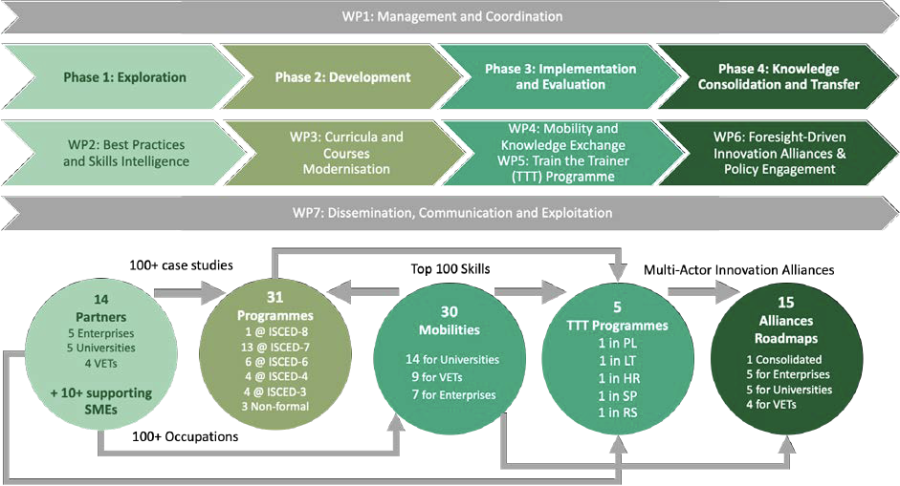
SKILLBRIDGE is an adaptive transformation cycle where intelligence continuously informs action, and action generates new evidence that feeds back into intelligence. Four interconnected phases move the project from signal to systemic change.
Anticipate: Skills Intelligence & Foresight (WP2) The Skills Observatory integrates labour market data, scientific publications, stakeholder interviews and programme inputs through AI-supported analytics and expert validation. The result is prioritised capability intelligence across the four Strategic Domains, the transformation priorities and emerging Capability Areas that give the rest of the project its direction.
Develop: Curriculum Modernisation (WP3) Validated intelligence is translated into programme and curriculum transformation. Institutions redesign learning outcomes, introduce new capability-oriented modules, adapt pedagogical approaches and restructure programme architectures, in anticipation of the transformation dynamics identified through the Observatory.
Curriculum modernisation can take many forms, including:
- new programmes and programme revisions
- new courses and updated learning outcomes
- innovative teaching and assessment approaches
- new learning resources and digital materials
- micro-credentials and flexible learning pathways
- strengthened governance and curriculum review mechanisms
Transform: Mobility & Educator Development (WP4 + WP5) Transformation is tested and deployed through action. Mobility activities like faculty exchanges, student placements, and enterprise immersion bring capability development into real-world innovation contexts. The Train-the-Trainer programme multiplies impact by equipping educators to carry new methodologies and capability frameworks into their institutions and networks.
Deliver Impact: Alliances, Policy & Sustainability (WP6 + WP7) Results are consolidated, communicated and embedded for the long term. The CFI Alliance and Skills4Innovation Alliance institutionalise collaboration. Policy engagement and ESCO-aligned outputs connect project evidence to European-level reform. Immersive storytelling and digital platforms ensure that intelligence, transformation stories and methodologies remain accessible and reusable beyond the project's formal lifecycle.
Two transversal layers run across all phases: WP1 (Management & Coordination) which oversees governance, quality assurance and consortium coherence. WP7 (Communication, Dissemination & Exploitation) in charge of the visibility, impact amplification and long-term exploitation.